Body-Led Therapy for Trauma, PTSD & Chronic Stress
Yoga and Somatic APPROACHES for LASTING RECOVERY
You’ve tried to feel better. HAVE YOU TRIED BETTER FEELING?
Perhaps you’ve tried talking therapy, medication, retreats, exercise, yoga or any number of approaches to feeling better. Some may have helped. And yet you may still find yourself anxious, exhausted, numb, disconnected or burned out - as though something in you hasn’t caught up with what you know in your mind.
Many approaches to mental health begin with our thoughts, behaviours and symptoms. Body-led therapy adds another question: What has your body learned through what you’ve experienced?
When we begin exploring how our body - our nervous system - has adapted to chronic stress, or traumatic, overwhelming experiences, symptoms like compulsive or self-destructive behaviours or rigid thought patterns can start to make sense. Not as things that are ‘wrong’ with us, but as patterns that may once have helped us cope, protect ourselves or survive what happened to us.
The difficulty is that when trauma or chronic stress are prolonged, over time our nervous system may become hyper-sensitised and recalibrated to a sustained, heightened ‘survival mode’, such that these once-protective patterns can continue long after the circumstances that created them have changed, and can become life-limiting.
This is where body-led therapy offers another way in. Because understanding the origin of why we are persistently on edge, fearful and easily triggered when logically we know we are safe, can be enormously valuable. And because bodies learn new ways of being through new experiences.
Through carefully invited experiences of movement, awareness, choosing to dial intensity of sensation up or down, and therefore agency, we can create opportunities for our body to learn something new; something other than powerlessness. And for a new, perhaps more empowered sense of ‘self’ to emerge.
This is where Trauma Center, Trauma Sensitive Yoga (TCTSY) - a body-led therapeutic method of which I am a certified facilitator - comes in. Because it is in our body - not our mind - that recovery can truly begin.
If you’re ready to:
Feel safer, more grounded and more empowered in your body, not trapped in or at war with it;
Be able to calm yourself when things get difficult with portable tools without needing a doctor, pill or therapist to ‘fix’ you;
Build a compassionate relationship with yourself, and develop the capacity for more authentic and trusting relationships with others;
Break free from destructive compulsions — like endless scrolling, substance dependency, over- or under-eating or chronic overworking — and feel more present in your daily life;
— this work is for you. I give some more information about TCTSY below.
TRAUMA CENTER, TRAUMA SENSITIVE YOGA (TCTSY)
TCTSY is now a recognised as an effective somatic therapy for complex trauma and PTSD, with a strong evidence base, having been offered to, and developed with, war veterans, sexual assault survivors, at-risk youth and survivors of childhood abuse and neglect, among others.
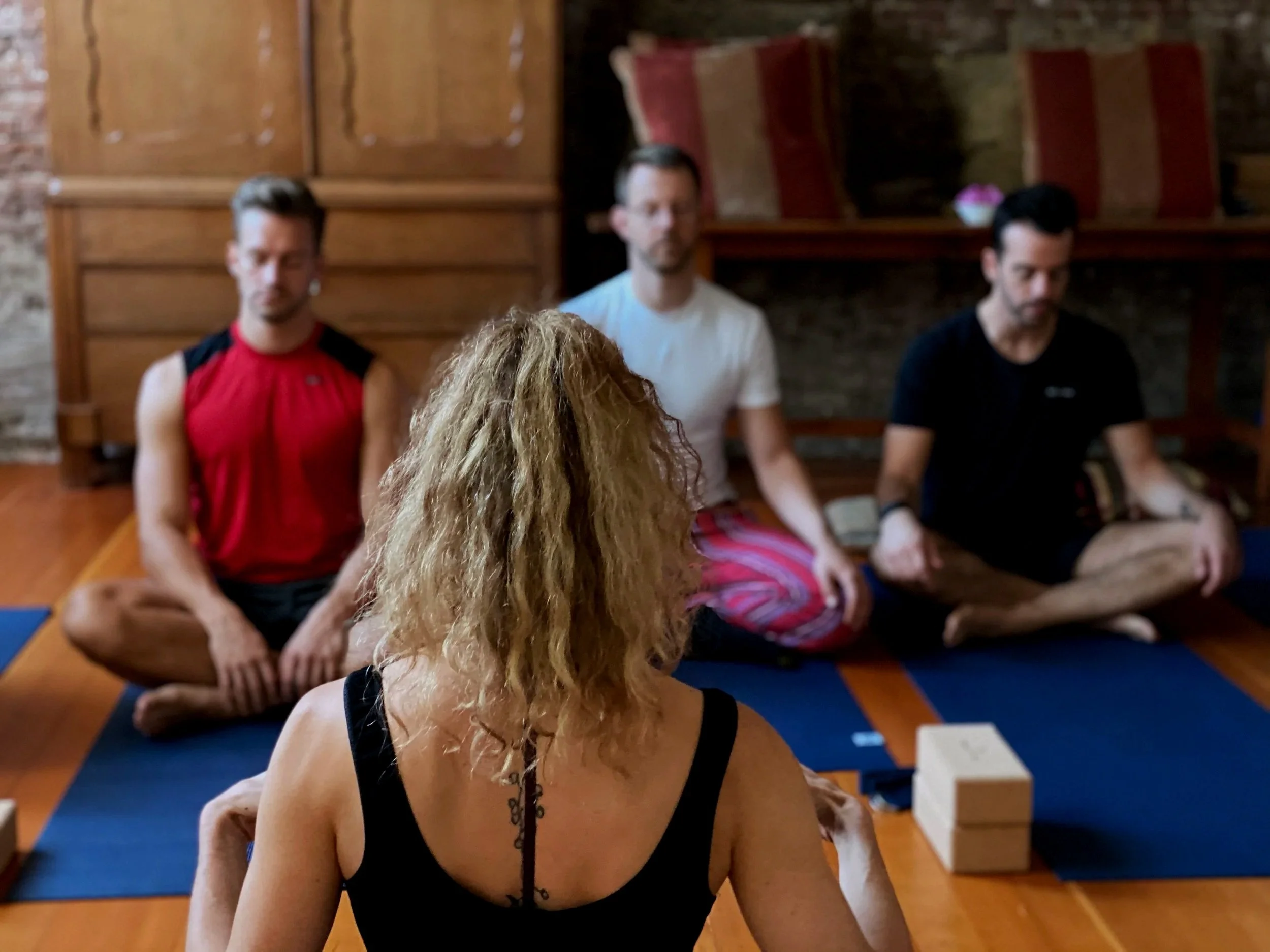
The practice involves being offered a series of physical shapes or movements to explore, which create opportunities to notice bodily sensations and feelings in the present moment, for example muscles moving, breath, warmth, stretch, tingling.
The focus is not on trying to copy something the facilitator is doing, but on the internal experience of the participant – what the forms feel like instead of what they look like - and then choosing whether to stay with what is being experienced, or, for example if there is pain or discomfort, or something else feels better, doing a different variation of it, or not doing it at all. Without needing to ask or explain.
With this shift in orientation, from the external to the internal, the power resides within the individual, not the TCTSY facilitator.
By focusing on the felt sense of the body to inform choice-making during practice, TCTSY provides opportunities for participants to restore the connection between mind and body, and to cultivate a sense of agency, which is often compromised as a result of surviving trauma.
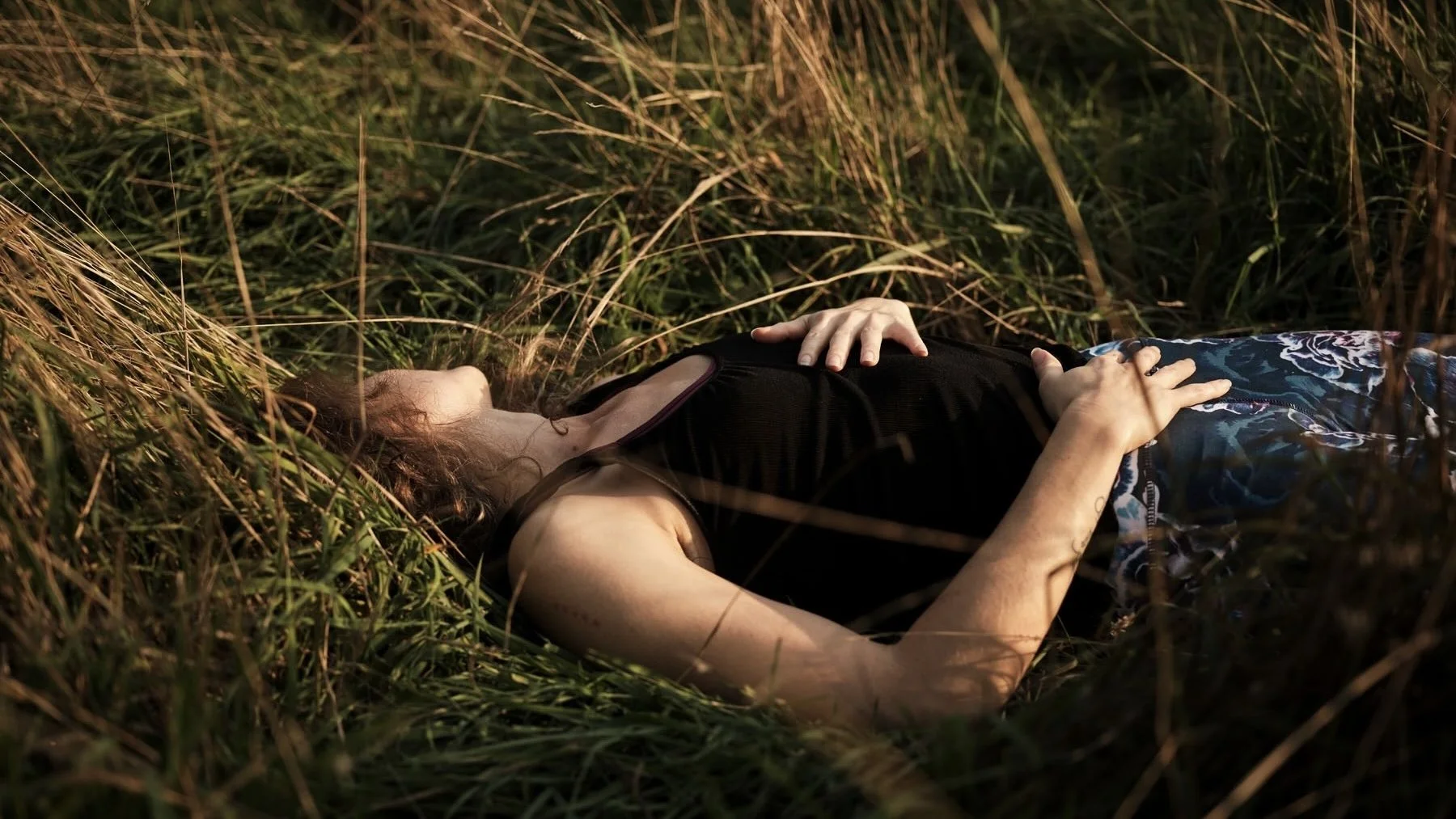
Learning to hear the ‘VOICE OF THE body’ again
A key aspect of body-led trauma recovery is rebuilding interoception: our capacity to notice, interpret and respond to signals arising from within our body.
Trauma can change our relationship with these signals. Some people become disconnected from their bodies, while others become acutely sensitive to sensations associated with threat. Body-led therapy offers opportunities to explore these experiences gradually, at whatever pace feels safe, without forcing awareness or expecting any particular response.
Through practices involving invited movement, breath, stillness and noticing, we can become more aware of what is happening within us with a greater sense of greater curiosity rather than, say, fear, and gradually develop a sense of agency in terms of how we respond.
This isn't about becoming hyper-aware of every bodily sensation, or learning to control how we feel. It is about rebuilding a relationship with our body as a source of information, an awareness that we have options in terms of our responses and, over time, greater trust in self - and being able to show up as one’s authentic self, with all our needs, in the company of others. In other words, rebuilding trust in the potential for relationships to be mutually supportive rather than coercive.
“All yoga teachings share a core belief: That connecting and relating, whether to ourselves or to others, is central to human nature. When the relating is consistently indifferent or threatening, our survival systems dominate and the stage is set for us to shut down, withdraw and become sick. When one is consistently related to with compassion, our systems are balanced and support the development of our highest capacities.”
— Alexandra Cat, Teaching Faculty, Center for Trauma & Embodiment, TCTSY facilitator & NHS researcher.
how STARTING TCTSY WITH ME works
1) We start with a conversation
We begin with a conversation about what’s going on for you, what you’re struggling with, and what you want to achieve, and I will tell you more about TCTSY and what a session is like practically.
This initial call is free and you are under no obligation to work with me.
The call takes place online via Zoom. You don’t need to download the Zoom app
2) INTAKE QUESTIONNAIRE
I’ll send you my intake questionnaire, the answers to which help me understand how best to work with and support you.
The more information I have the better, however, you are also free not to answer a question/s. Once I receive it back from you, I contact you to schedule a first session.
You’re welcome to plan just one session, though I recommend 3 to begin with and then reviewing.
3) WE do A FIRST SESSION
The sessions can be from 30 mins to an hour long and may be in person, if we live in the same area, or online via Zoom.
I might ask for our first session to an hour if I have some questions about your intake form that I’d like to go through with you.
You can then decide if you want to book further sessions with me, if you have not already done so.
4) We work together at your pace
You can book further sessions with me as you go, according to your needs, or you can book a block of sessions. I will do my best to fit these in with your schedule.
SESSIONS AND COSTS
Initial ‘hello’ call (Zoom)
£0
If you wanted to move forward with me by the end of this call, I’d email you my intake form to read and fill in.
60 - 75 mins (in-person or Zoom)
£125 standard rate per session
£85 supported rate per session
*The supported rate is available for people who are not currently in employment, who are receiving state support or who are experiencing financial constraint. No evidence is required
**For those who would like to work together on an ongoing basis, I offer a reduced rate when booking four or more standard-rate sessions. Please get in touch if you’d like to arrange a block.
**If you are a charity organisation or company seeking to organise group classes for service users or employees, feel free to get in touch to discuss tailored pricing.

“I’ve had an eating disorder for a long time and The stresses of my job mean I also find it hard to be present, often negative thinking, planning or judging. my goal was to settle down, to rest and to be kinder to myself. What really helped me is that Charlotte always gave me options and was flexible in responding to how I was feeling. It helped me to listen to my body and what I needed, and really helped me to be open to this kind of work.”
— Wiebe, Headhunter, Germany
QUESTIONS YOU MAY HAVE
-
No. This is body-led, trauma-sensitive work that may use movement, posture, breath and interoceptive awareness as therapeutic tools. Rather than focusing on flexibility or achieving particular poses, we work with noticing, choice and ‘taking effective action’ (making personal adjustments and modifications to what we’re doing in response to noticing, for example, discomfort or curiosity with particular shapes or movements) — gradually building greater agency, body awareness and capacity for regulation.
-
This is very different from a typical group yoga class. Trauma-sensitive body-led practice is designed around choice, agency and your individual experience rather than following a prescribed sequence or achieving particular postures. You don’t need to perform, keep up with anyone or make your body look a certain way. If previous yoga experiences haven’t felt helpful — or even felt uncomfortable — we can explore what works differently for you.
-
No. You don’t need to tell or retell the story of what happened in order to work with me. Our focus can remain on your present-moment experience and what you notice in your body. You’re always welcome to share what feels relevant, but there is no requirement to disclose or verbally process traumatic experiences.
-
Absolutely. Body-led trauma support can complement psychotherapy, counselling, medication or other forms of care. If you’re already working with other professionals, we can consider how this work best fits alongside the support you already have.
-
We work at your pace. Trauma-sensitive practice is not about pushing through discomfort or deliberately overwhelming you. You have choice throughout the process — including whether to try something, change it, pause or stop. Part of the work is gradually developing greater capacity to notice and respond to your own needs, rather than trying to comply with something I am doing or offering.
-
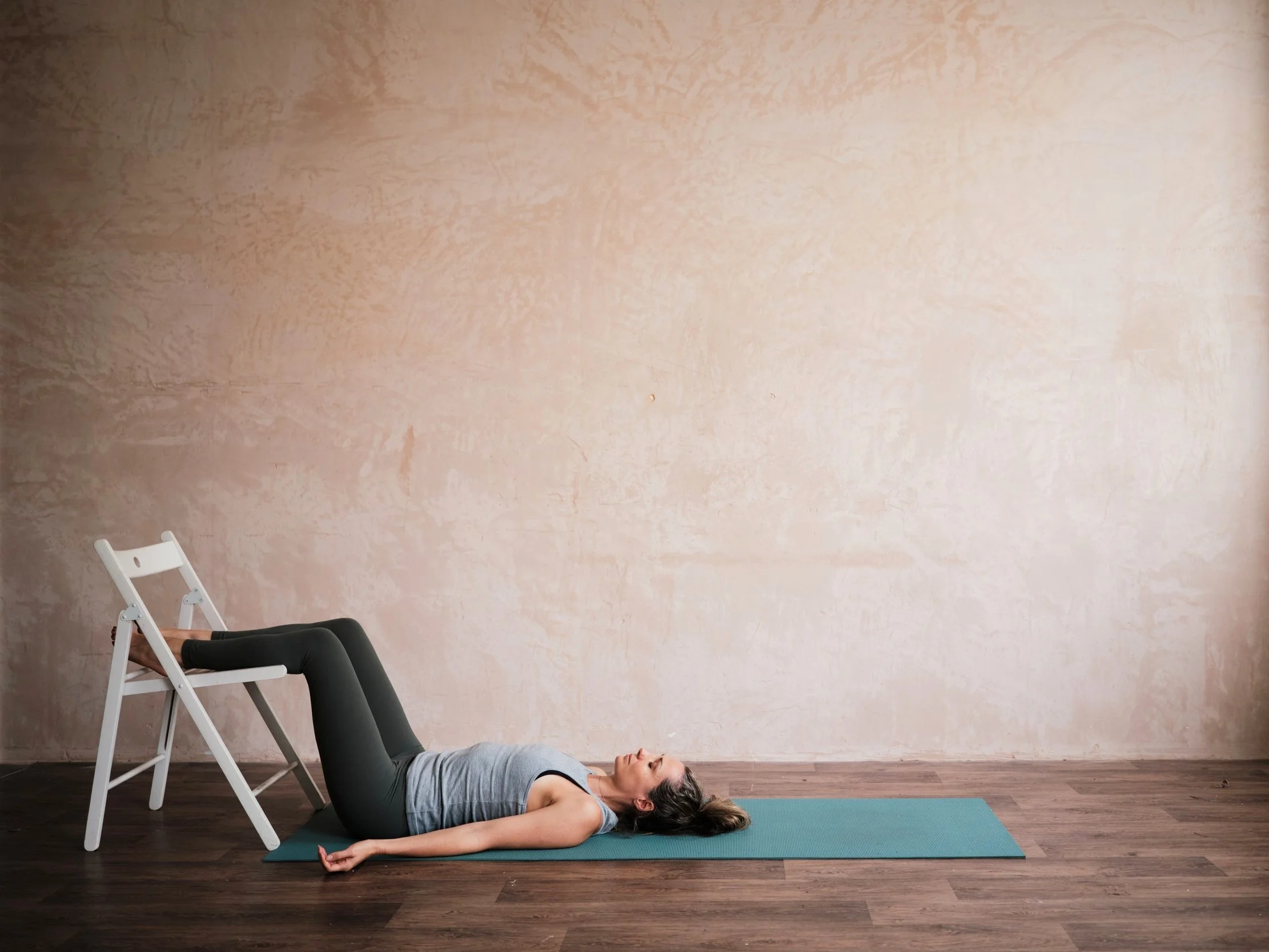
Not at all. You don’t need any previous yoga or movement experience, and there is no required level of fitness or flexibility. Practices can be adapted to different bodies, physical capacities and circumstances — including working from a chair, for example, if that is more appropriate for you.
-
Sessions are tailored to you and may include simple movement or postural practices, breath awareness, interoceptive exercises and practical psychoeducation about stress and trauma. We might explore different ways of noticing and responding to sensations in the body, always with choice over what you do and how you participate. You don’t need special equipment or previous experience.
-
No. I am a somatic trauma practitioner and certified TCTSY facilitator, not a psychotherapist or psychiatrist. My work focuses on body-led and trauma-sensitive approaches and can be used alongside psychotherapy or other clinical care where appropriate. If your needs fall outside my scope of practice, I will always encourage you to seek appropriate specialist support.
PRIVATE TRAUMA-INFORMED MOVEMENT, BREATH & MEDITATION
Alongside TCTSY, I also offer private trauma-informed sessions drawing on movement, yoga, breath and meditation.
These sessions don't follow the TCTSY methodology and don't require a therapeutic intake process. Instead, we can work more freely with embodied practices according to what you would like to explore — whether that's developing a personal yoga practice, finding ways to work with stress and activation, building strength, balance, coordination and body awareness, or learning to meditate.
Sessions are suitable for complete beginners as well as those with an established practice, and can be booked individually or in four-session blocks. Feel free to book directly through my website.
COSTS
30 minutes — £75
60–75 minutes — £145