
PTSD, VETERANS AND THE BODY: WHY RECOVERY DOESN’T ALWAYS BEGIN WITH TALKING
PTSD, Veterans and the Body: Why Recovery Doesn’t Always Begin with Talking
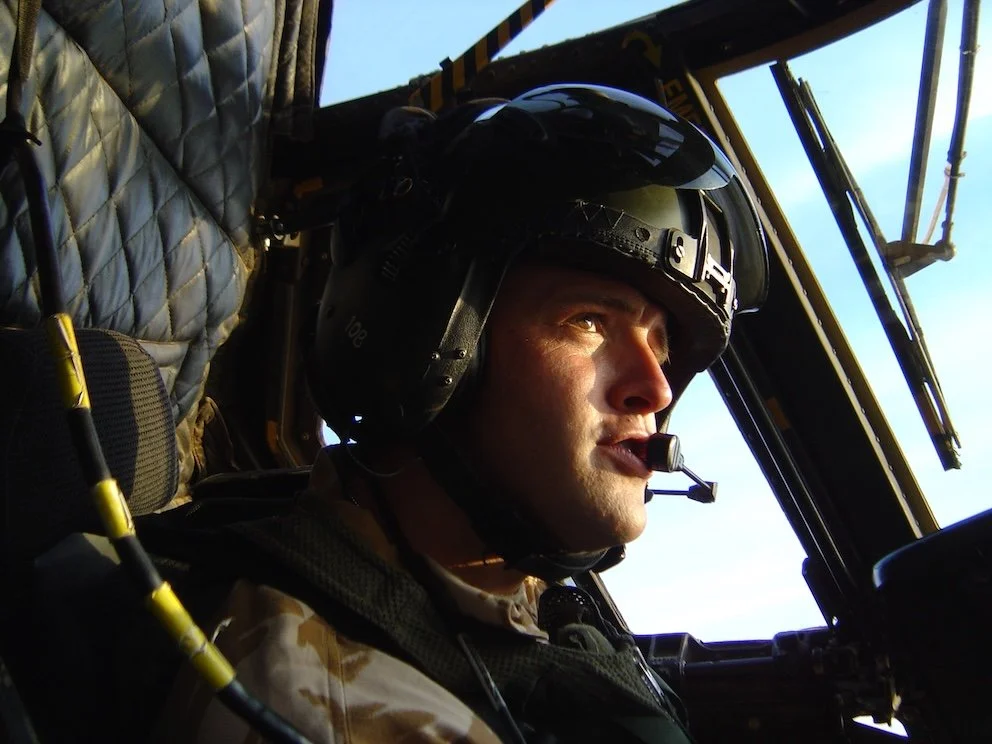
ALTERNATIVE APPROACHES FOR WHEN Service Ends But Your Nervous System Doesn’t KNOW IT YET
For many Armed Forces veterans, including several members of my immediate family, leaving can feel more like stepping into unfamiliar territory.
The structure and chain of command that shaped everyday life has gone. The camaraderie, shared purpose and routines that once felt so familiar have changed. Family relationships may need to be renegotiated. Identity can shift. And for some, a nervous system that spent one or more tours preparing for, or facing, life-threatening danger, doesn’t simply switch off because service has ended.
As the daughter, sister and sister-in-law of people who served in the British Army and Royal Air Force, I witnessed this transition first-hand. I saw extraordinary resilience, commitment and professionalism. I also saw that the move into civilian life isn’t always a welcome, or welcoming, transition.
Many veterans report living with anger, anxiety, emotional numbness, hypervigilance, disrupted sleep, the complexity of moral injury or a sense of being disconnected from the people they love. Others simply recognise that something doesn’t feel quite right, but struggle to put it into words.
“I’ve tried talking. Why doesn’t anything change?”
Many people seek help through counselling, medication or support groups. These approaches can be incredibly valuable and, for many, life-changing.
But some veterans tell me they leave understanding why they feel the way they do, yet still find themselves reacting in exactly the same ways.
The body remains tense.
Sleep remains elusive.
The startle response is still there.
Relationships still feel difficult.
Habits of control, rigidity or self-soothing through substances become life-limiting
This isn’t because of any failing.
It’s because trauma isn’t only something we remember. It’s something the nervous system learns.
When the body has spent years adapting to environments where alertness, speed and readiness are essential, those survival responses don’t necessarily disappear when life becomes safer. Strongly conditioned, they continue doing the job they learned to do so well.
Why a body-led approach?
Body-led trauma therapy begins from a simple understanding:
Trauma affects both mind and body. Recovery can involve both, too.
Rather than asking people to revisit painful memories or explain experiences they may not wish to talk about, or that may still be too re-triggering to talk about, we begin somewhere other: noticing what is happening in their body in the present moment.
That might not sound like much.
Yet it can become the foundation for profound change.
Through the facilitator inviting - rather than dictating or teaching - movement, shapes, breathing and noticing sensations, and offering choices about how they might adjust their practice, the participant’s nervous system is offered repeated opportunities to experience self-agency rather than powerlessness. And, to learn how to expand their capacity to hold and respond in self-supportive ways to nervous system activation, rather than tipping into life-or-death survival reactions that put them right back into the eye of the original storm, such as a combat scenario.
Not because someone tells them that they‘re safe.
But because their body gradually begins to reach that conclusion for itself.
Safety isn’t something we can impose. It’s something a body concludes.
You don’t have to talk about what happened
This is one of the questions I’m asked most often.
The answer is no.
The people I work with never have to describe traumatic experiences in detail if they don’t want to.
They don’t need to justify their reactions.
My work doesn’t depend upon them telling their story.
Instead, we become curious about what their body is doing now.
Can you notice your breathing?
Do you perhaps notice your feet making contact with the floor?
Might there be feelable sensations in your shoulders or jaw during a neck stretch?
Can you discover, even briefly, that you have choices about how you move, where you look or whether you continue with an exercise?
These small moments matter.
For many people who have lived for years in survival mode, and also, within the military, in a culture where the individual and their needs are subordinate to the group and mission, they represent something far bigger than movement.
They represent a growing sense of self, and self-agency.
You already know how to push through
Military training develops remarkable qualities.
Discipline.
Commitment.
Teamwork.
The ability to continue despite discomfort.
Those strengths deserve enormous respect.
Yet sometimes the very strategies that helped someone survive and succeed in military life can make it difficult to recognise when support is needed afterwards; or, if they do recognise it, to ask for it.
Many veterans have become experts at carrying on.
At getting the job done.
At putting other people’s needs before their own.
Body-led trauma work isn’t about taking those strengths away.
It’s about expanding the options available.
Sometimes strength looks less like enduring and more like recognising what one‘s body needs in this moment.
What does the research say?
Over the past two decades, researchers have increasingly recognised that effective trauma treatment can include the body as well as the mind.
Studies of trauma-informed, body-based approaches—including Trauma Center Trauma Sensitive Yoga (TCTSY)—have found improvements in PTSD symptoms, emotional regulation, body awareness and overall quality of life. Research involving veterans has also reported positive outcomes, including reductions in hyperarousal and improvements in wellbeing.
One reason these approaches appear to help is that they create opportunities for people to experience choice, agency and present-moment awareness without requiring them to relive traumatic memories.
Rather than replacing other forms of support, body-led approaches can work alongside counselling, psychotherapy, EMDR or medication as part of a broader recovery process.
If you’d like to explore the evidence in more depth, I’ve linked a selection of research papers and resources below.
What a session with me looks like
No military-style commands.
No pressure to perform.
No expectation that you should relax.
Instead, sessions are collaborative and paced around you.
I’ll offer invitations rather than instructions.
You’ll always have choices.
We’ll work together to notice what feels supportive, what doesn’t, and how your body responds.
Many people find this surprisingly unfamiliar at first.
For those whose lives have involved following orders, managing risk or putting others first, simply discovering that they are free to choose can be quietly transformative.
Recovery isn’t about becoming who you were before
Many veterans tell me they simply want to feel like themselves again.
I understand that.
But recovery isn’t always about returning to an earlier version of yourself.
Sometimes it’s about building a new relationship with your body—one that allows you to carry your experiences without remaining organised around them.
It isn’t about forgetting.
It isn’t about pretending difficult things never happened.
It’s about gradually expanding the moments in which life feels bigger than survival.
If you’re considering support
Reaching out isn’t a sign that you’ve failed.
Nor does it mean you’re weak.
In many ways, it asks for the same qualities that military service demanded: courage, honesty and a willingness to take the next step, even when the outcome isn’t yet certain.
If you’re curious about whether a body-led, trauma-sensitive approach could support your recovery, I’d be delighted to arrange a free introductory conversation.
Together, we can explore what’s been difficult, what you’re hoping for, and whether this approach feels like the right fit for you.
Further Reading: The Evidence Behind Body-Led Trauma Recovery
If you're interested in exploring the research behind body-led approaches to PTSD in more depth, these papers provide an excellent starting point. Together, they reflect a growing body of evidence suggesting that trauma-sensitive, body-based interventions can complement established psychological therapies, helping people reconnect with their bodies, regulate their nervous systems and improve quality of life.
1. Veterans and Trauma-Informed Yoga
Journal of Military, Veteran and Family Health
This review explores the emerging evidence for trauma-informed yoga in military and veteran populations, highlighting its potential to support recovery from PTSD while improving emotional wellbeing, sleep and resilience.
Key findings:
Improvements in PTSD symptoms
Better emotional regulation
Improved sleep
Increased quality of life
Well tolerated and acceptable for many veterans
Read the paper:
https://utppublishing.com/doi/10.3138/jmvfh-2023-0037
2. Trauma Center Trauma-Sensitive Yoga Compared with Cognitive Processing Therapy
JAMA Network Open (Randomised Clinical Trial)
One of the most significant studies to date compared Trauma Center Trauma-Sensitive Yoga (TCTSY) with Cognitive Processing Therapy (CPT), a first-line treatment for PTSD, in women veterans experiencing PTSD related to military sexual trauma. The study found that TCTSY produced improvements equivalent to CPT, with a substantially higher treatment completion rate, suggesting it may be a particularly acceptable option for some veterans.
Highlights:
Clinically meaningful reductions in PTSD symptoms
Improvements maintained at follow-up
Higher treatment completion than CPT
Supports body-led therapy as an effective complement to established PTSD treatments
Read the paper:
https://jamanetwork.com/journals/jamanetworkopen/fullarticle/2812725
3. TCTSY vs gold standard psychological therapies for Veterans with military sexual trauma: a systematic review
Building on the last study, a 2024 systematic review by researchers from Combat Stress and King's College London Centre for Military Health Research, published in the Journal of Military, Veteran and Family Health in 2024, examined the evidence for treating PTSD resulting from military sexual trauma (MST) in women veterans. The review analysed 998 published papers, ultimately identifying 12 studies that met the criteria for inclusion. Together, these studies investigated seven different treatment approaches for PTSD.
The review concluded that trauma-focused psychological therapies, particularly Cognitive Processing Therapy (CPT), currently have the strongest evidence base for reducing PTSD symptoms over the longer term. However, the review also identified emerging evidence for Trauma Center Trauma-Sensitive Yoga (TCTSY) as an effective non-trauma-focused intervention. Participants receiving TCTSY demonstrated meaningful reductions in PTSD symptoms that continued beyond the end of treatment.
One of the most interesting findings wasn't simply whether treatments worked, but how people engaged with them. Across the studies reviewed, trauma-focused therapies generally reported higher dropout rates, whereas non-trauma-focused approaches such as TCTSY tended to have better treatment retention, suggesting that body-led interventions may feel more accessible or acceptable for some veterans—particularly those who find talking directly about traumatic memories overwhelming.
They concluded that it represents a promising complementary or alternative approach, while calling for more high-quality research, longer-term follow-up studies and greater consistency in how military sexual trauma is defined and studied internationally.
Read the research:
King's Centre for Military Health Research: https://www.kcl.ac.uk/kcmhr
Combat Stress: https://www.combatstress.org.uk
JAMA Network Open Randomised Clinical Trial: https://jamanetwork.com/journals/jamanetworkopen/fullarticle/2812725
If you are a UK veteran seeking support for PTSD or other mental health difficulties, Combat Stress provides specialist services and operates a 24-hour helpline on 0800 138 1619.
4. Bridging Body and Mind: Considerations for Trauma-Informed Yoga
This paper explores why trauma-informed yoga may be effective. Rather than treating the body as separate from psychological healing, it describes how carefully adapted movement, interoception, choice and nervous system regulation can help rebuild a person's sense of safety, agency and connection. It also discusses important considerations for military populations, including adapting practices to avoid triggering hyperarousal or dissociation.
Highlights:
Explains the principles underpinning trauma-informed yoga
Emphasises interoception, agency and nervous system regulation
Discusses adaptations for trauma survivors and veterans
Highlights the importance of safety, choice and specialised training
Further reading: RESEARCH INTO THE EFFICACY OF TRAUMA SENSITIVE YOGA
