
BREATHING AND THE NERVOUS SYSTEM: WHY HOW WE BREATHE CAN CHANGE HOW WE FEEL
Breathing and the Nervous System: Why How We Breathe Can Change How We Feel
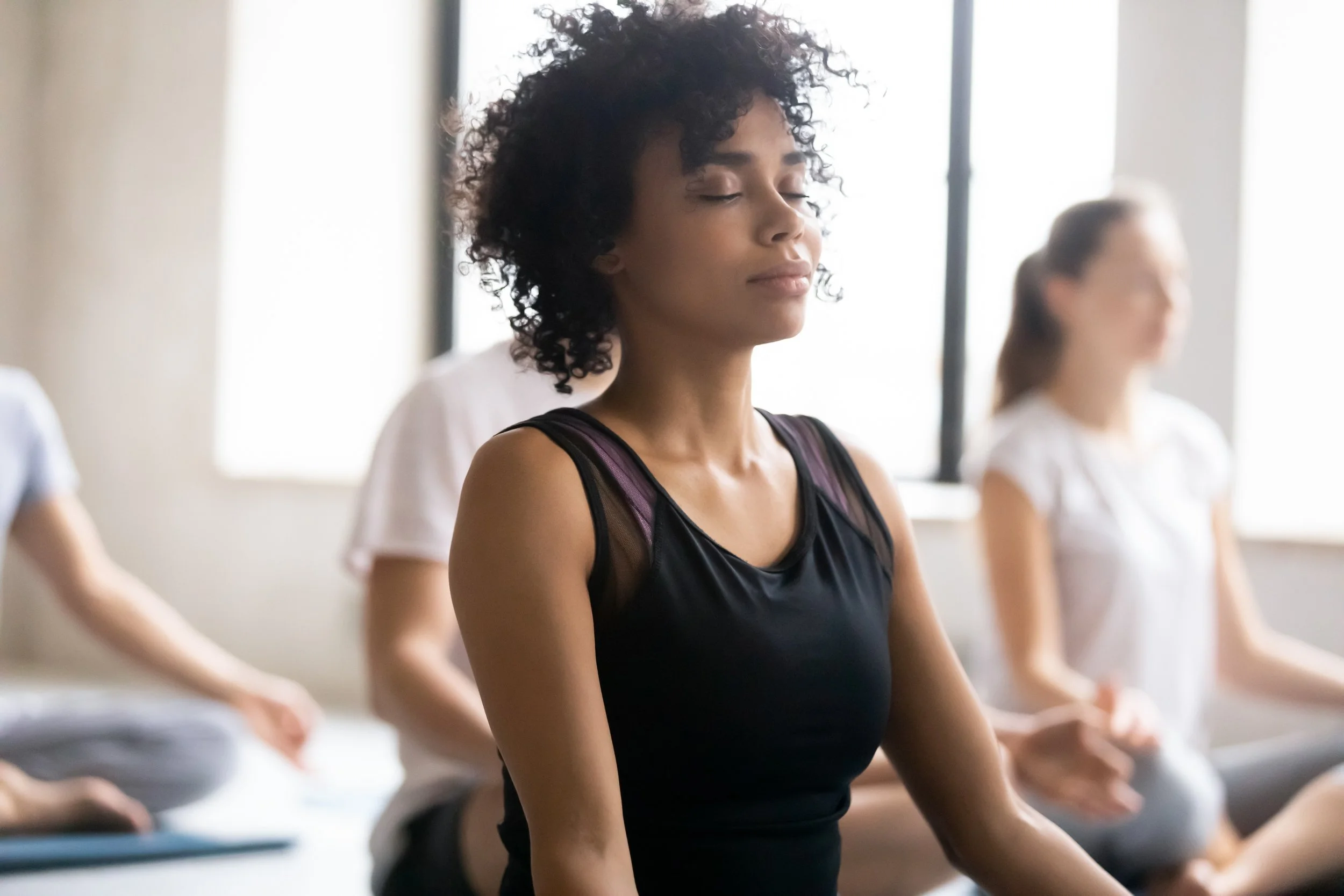
What ANCIENT AND MODERN Science Tell Us and why the story is more nuanced than ‘take a deep breath’
Breath is our most immediate source of life. Taking a breath is the first independent thing we do when we enter the world, and releasing our final breath will be the last.
Every breath in between forms a thread running through our seconds, minutes, days and years.
In the yogic traditions in which I trained, breath is understood as our most important source of prana: the vital energy that animates life. It works through the mind, the heart and digestion; through walking, running, talking and thinking; through our capacity to act, connect and express our unique presence in the world.
Modern physiology uses very different language.
But thousands of years after yogic and Tantric traditions began systematically exploring the relationship between breath, body and mind, science is increasingly able to describe something those traditions understood experientially:
Changing how we breathe can change how we feel.
BREATH: A BRIDGE BETWEEN CONSCIOUS AND UNCONSCIOUS
Breathing occupies an unusual place in human physiology.
Most of the processes governed by our autonomic nervous system happen without our conscious involvement. We don't need to remember to make our heart beat, digest our lunch or adjust our blood pressure when we stand up.
Breathing also happens automatically.
But unlike most of these processes, we can consciously influence it.
We can breathe faster or slower.
More deeply or shallowly.
Through the nose or mouth.
We can alter the relative length of the inhale and exhale, or pause between breaths.
This makes breathing an unusual bridge between processes we can consciously influence and the largely automatic systems regulating our internal state.
The yogis—and particularly the Tantric traditions—explored this relationship centuries before we had the language of autonomic physiology.
They developed pranayama: sophisticated practices involving the conscious modulation of breath to influence energy, attention and states of consciousness.
Some pranayama practices were intended to settle and focus.
Others to energise.
Others to support the concentration and stillness required for meditation.
And this distinction remains important today.
Not all breathwork is calming.
THERE IS NO SINGLE “CORRECT” WAY TO BREATHE
We often hear instructions to “take a deep breath” when we're anxious or stressed.
But breathing is more nuanced than this.
Our breathing continually adapts to what we're doing.
We need to breathe differently when running for a bus than when sleeping. Differently when speaking, laughing, exercising or resting.
Rather than pursuing one perfect breathing pattern, it may be more useful to think about flexibility: can our breathing adapt appropriately to what the moment requires, and return towards a comfortable baseline afterwards?
Stress can alter this flexibility.
When the brain detects threat, breathing may become faster, shallower or more irregular as the body prepares for action.
This is useful when we genuinely need to run or defend ourselves.
But human beings can activate the same stress systems in response to threats we cannot physically fight or flee from: work pressure, financial uncertainty, relationship difficulties, an upsetting email or the relentless stream of information arriving through our phones.
If activation becomes habitual, our breathing patterns can change with it.
Some of us begin breathing predominantly into the upper chest.
Some unconsciously hold our breath while concentrating.
Some over-breathe.
Others brace through the abdomen or chest.
Posture, prolonged sitting, pain, illness and even cultural habits such as habitually holding the stomach in can influence respiratory movement too.
Breathing patterns can therefore both reflect our internal state and contribute to it.
This is where consciously working with the breath becomes interesting.
THE DIAPHRAGM: MORE THAN “BELLY BREATHING”
The diaphragm is our primary respiratory muscle: a large dome-shaped muscle sitting beneath the lungs and separating the chest from the abdominal cavity.
As we inhale, the diaphragm contracts and descends, increasing the space available for the lungs to expand. As it moves downwards, the abdominal contents accommodate that movement, which is why the belly and lower ribs may gently expand.
As we exhale at rest, the diaphragm relaxes and rises again.
We often call this “belly breathing” or “diaphragmatic breathing”, although that description can be slightly misleading.
Healthy breathing isn't simply about pushing the belly out or taking the biggest possible breath.
The ribcage, abdomen, diaphragm and other respiratory muscles work together in a coordinated, three-dimensional movement.
And deeper isn't always better.
Taking unnecessarily large breaths can sometimes mean breathing more air than our metabolism requires, altering carbon dioxide levels and potentially producing sensations such as dizziness, tingling, chest tightness or light-headedness.
For someone prone to panic, those sensations can themselves feel threatening.
So rather than encouraging people simply to “breathe deeply”, I increasingly prefer to think about allowing breathing to become comfortable, unforced, quiet and responsive.
BREATHING AND THE NERVOUS SYSTEM
One reason slow breathing has attracted considerable scientific interest is its relationship with the autonomic nervous system and cardiovascular system.
Our heart does not beat like a metronome.
The time between one heartbeat and the next continually changes.
One influence on this variation is breathing.
During inhalation, heart rate tends to increase slightly.
During exhalation, it tends to decrease.
This naturally occurring phenomenon is called respiratory sinus arrhythmia, and it contributes to what we measure as heart rate variability, or HRV.
Broadly speaking, HRV reflects the body's capacity for flexible autonomic regulation—although it is influenced by many factors and shouldn't be interpreted as a simple score of how “regulated” or healthy someone is.
Research into slow-paced breathing suggests that deliberately slowing respiration can influence this interaction between breathing, heart rate, blood pressure regulation and autonomic activity.
One particularly interesting area of research involves resonance-frequency breathing.
COHERENT OR RESONANCE BREATHING
Psychiatrists Richard Brown and Patricia Gerbarg have helped popularise a practice they call coherent breathing, informed partly by longstanding yogic breathing traditions.
It involves breathing slowly and evenly, often at around five or six breaths per minute.
Brown and Gerbarg have incorporated breathing practices into programmes supporting populations affected by significant stress and trauma, including survivors of natural disasters, war and other traumatic events.
More broadly, contemporary research into slow and resonance-frequency breathing has found that breathing at approximately 4.5–6.5 breaths per minute for many adults can produce particularly strong interactions between respiration, heart-rate variability and the cardiovascular baroreflex—the system involved in moment-to-moment blood-pressure regulation.
There isn't one magical breathing rate that suits everyone.
An individual's precise resonance frequency varies.
But the broader finding is fascinating: breathing slowly and rhythmically can create measurable changes across interconnected respiratory, cardiovascular and autonomic systems.
This may be one reason practices involving slow rhythmic breathing appear independently across very different contemplative traditions.
Research has famously observed breathing rhythms of around six breaths per minute during the Latin Ave Maria and traditional mantra recitation, for example.
Long before heart-rate monitors or neuroscience laboratories existed, human beings appear to have discovered through experience that rhythmically slowing the breath can profoundly alter our internal state.
BREATH IS ALSO INTEROCEPTION
There is another dimension to breath that I find particularly interesting in my work.
Every breath generates sensory information.
We can feel movement through the ribs.
Expansion in the abdomen.
Air passing through the nostrils.
Changes in pressure, temperature and internal sensation.
Breathing is therefore intimately connected with interoception: our capacity to sense, interpret and respond to what is happening within our bodies.
This matters because consciously attending to breathing isn't only about changing respiratory physiology.
It can also become a practice of noticing ourselves.
What happens if I slow down?
Where do I feel movement?
Am I bracing?
Do I notice an urge to take a larger breath?
Does changing my breathing feel supportive—or uncomfortable?
Rather than using breath as something we impose upon the body, it can become another source of information.
And information creates the possibility of choice.
WHY “JUST TAKE A DEEP BREATH” DOESN'T WORK FOR EVERYONE
This is particularly important in trauma-informed work.
Breathing practices are often presented as universally calming.
They aren't.
For someone living with panic, trauma or heightened sensitivity to internal sensations, focusing closely on breathing can sometimes increase distress.
Breath holds, rapid breathing, forceful techniques and deliberate over-breathing can create powerful physiological sensations.
Even slowing the breath may initially feel uncomfortable for someone whose body has become accustomed to a faster respiratory rhythm.
And being instructed to breathe in a particular way can itself feel intrusive when someone has experienced situations in which control over their body was taken away.
This is why I don't believe regulation should mean imposing a supposedly “correct” breath pattern on someone.
Sometimes simply noticing the breath is enough.
Sometimes noticing something else in the body feels more accessible.
Sometimes movement is a better doorway.
And sometimes leaving the breath completely alone is the most appropriate choice.
The question isn't:
“Am I breathing correctly?”
It might be:
“What do I notice when I breathe this way?”
BREATHWORK CAN CALM — AND IT CAN ACTIVATE
The yogic traditions have always understood something that modern wellness culture sometimes overlooks.
Different breathing practices do different things.
Some practices slow and settle us.
Others deliberately stimulate and energise.
Rapid breathing practices, extended breath retention and more intense forms of breathwork can produce significant changes in physiology and subjective experience.
That doesn't make them inherently bad.
But it does mean that more intense does not necessarily mean more therapeutic.
For someone already living in a highly activated state, adding more activation may not be what their system needs.
Context matters.
Health matters.
Trauma history matters.
And individual response matters.
Learning to work with breath is therefore less about collecting increasingly elaborate techniques and more about developing sensitivity to what a particular practice actually does to you.
FIVE QUALITIES I EXPLORE IN FOUNDATIONAL BREATHING
In my own teaching, before introducing more complex pranayama or breathwork, I often return attention to a few simple qualities of comfortable resting breath.
I might invite someone to explore whether breathing feels:
Diaphragmatic and three-dimensional — allowing movement through the lower ribs and abdomen rather than forcing the breath high into the chest.
Smooth — noticing whether there are habitual catches, interruptions or strain.
Quiet — allowing breathing to become less effortful rather than deliberately pulling in large quantities of air.
Rhythmic — exploring an even, comfortable breathing rhythm where appropriate.
Unforced — allowing natural transitions between inhale and exhale rather than imposing holds or pauses.
These are not rules for how everyone “should” breathe every moment of the day.
They are things to become curious about.
The aim isn't perfect breathing.
It's greater respiratory flexibility and awareness.
BREATH AS PRACTICE
Perhaps this is ultimately what fascinates me most about breathing.
It is always here.
We cannot breathe yesterday.
We cannot take tomorrow's breath in advance.
We can only breathe the breath happening now.
This makes breathing both a physiological process and an extraordinarily simple doorway into present-moment awareness.
Modern science can increasingly describe how respiratory rhythms interact with cardiovascular function, autonomic regulation, brain activity and emotional state.
Ancient contemplative traditions described these relationships through very different frameworks: prana, energy, attention and consciousness.
I don't think we need to pretend these languages mean exactly the same thing.
Nor do we need one to validate the other.
But both point towards something worth exploring.
The breath sits at a remarkable intersection between what happens automatically and what we can consciously influence.
We can listen to it.
We can sometimes change it.
We can notice what happens when we do.
And through that process, we may gradually learn something not only about how we breathe—
but about how we meet ourselves.
Further reading on INTEROCEPTION: LEARNING TO LISTEN TO THE VOICE OF THE BODY
