
WHAT MAKES TRAUMA SENSITIVE YOGA (TCTSY) DIFFERENT?
What Makes Trauma Center Trauma-Sensitive Yoga (TCTSY) Different?
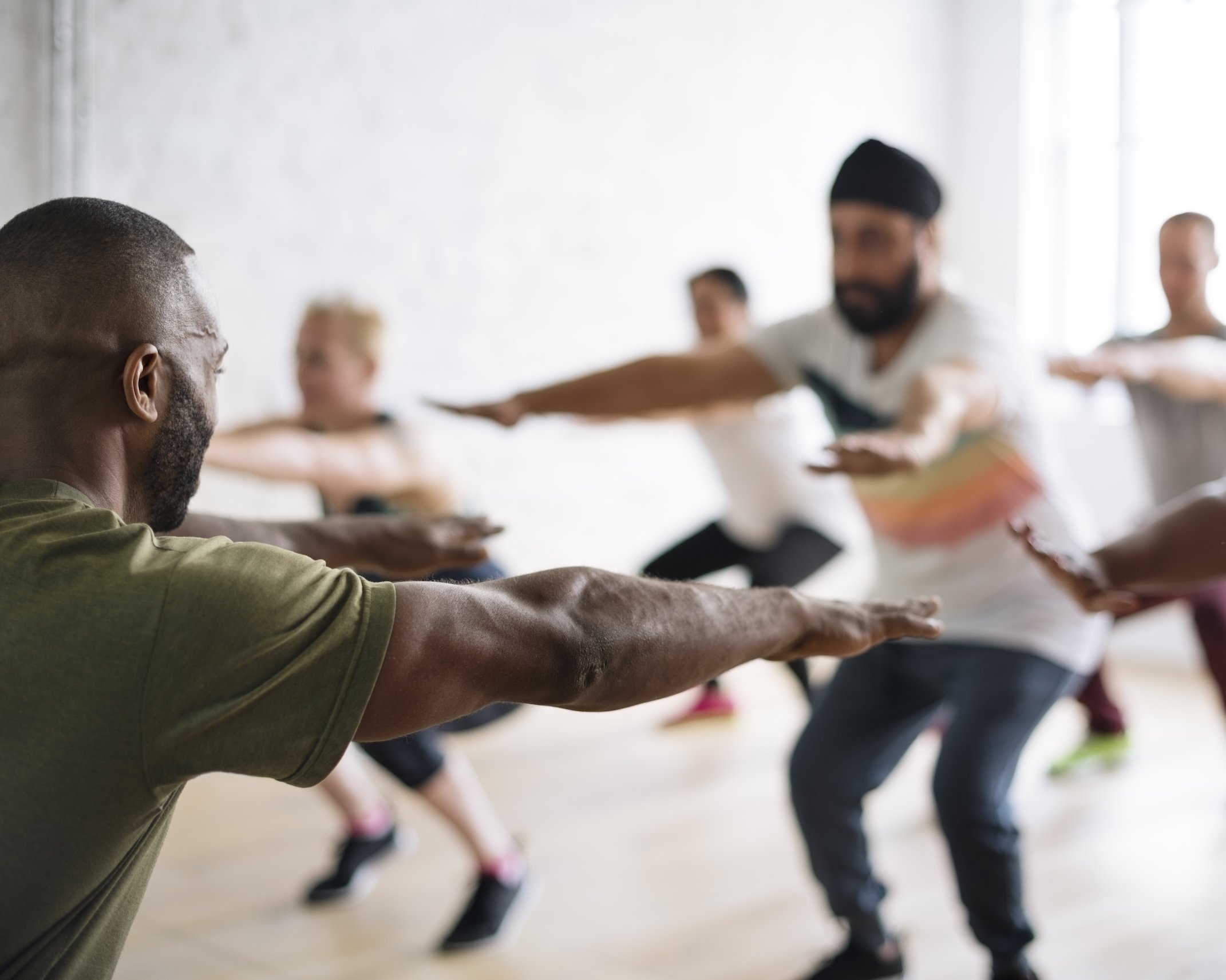
"If it's in the body, the treatment should be in the body."
— Dr Bessel van der Kolk
“What strikes me, and why I gave my book the title ‘The Body Keeps the Score,’ is that if it’s in the body, the treatment should be in the body. Body treatment is somewhere, like, way on the periphery of the world. Instead, we sit in a chair and we talk to people, somehow trying to magically make people safe in their body.
I did the first National Institutes of Health-funded study on Yoga.24, 25 It is more effective for chronic PTSD than any drug with people I’ve ever studied. I didn’t see a single drug-selling firm turn into a Yoga studio after we published this data. But this data was serious. If you learn how to really inhabit your body and learn to feel comfortable moving your body and being in your body, something starts shifting.”
If you've experienced trauma, you may already know that understanding what happened doesn't necessarily change how your body feels.
You might know, logically, that the danger has passed.
And yet your shoulders remain tense.
Your breathing stays shallow.
Your body startles easily.
You feel disconnected from yourself, or overwhelmed by sensations that seem to arrive out of nowhere.
For many people, this can be confusing. If we understand our experiences, why doesn't our nervous system simply move on?
Over the last two decades, trauma research has increasingly shown us that trauma is not simply stored as a story we remember. It changes the way we experience our own bodies, our relationships and our sense of safety in the world. This growing understanding has led to greater interest in body-based therapeutic approaches that work alongside psychotherapy rather than instead of it.
One of those approaches is Trauma Center Trauma-Sensitive Yoga (TCTSY).
Unlike most forms of yoga, TCTSY wasn't developed to improve flexibility, fitness or even relaxation.
It was developed as a clinical intervention for people living with complex trauma and chronic PTSD.
From yoga class to therapeutic practice
Trauma Center Trauma-Sensitive Yoga was developed by David Emerson and colleagues in collaboration with Dr Bessel van der Kolk at the Trauma Center in Boston (now the Center for Trauma and Embodiment).
Since then, it has become one of the world's most extensively researched body-based approaches to trauma care, with studies demonstrating meaningful improvements in PTSD symptoms, emotional regulation, embodiment and quality of life across a range of populations.
But what makes TCTSY unique isn't simply what people do.
It's how the practice is offered.
Trauma changes our relationship with our bodies
One of trauma's most significant effects is that it can disrupt our relationship with ourselves.
Many people become disconnected from internal sensations. Others become overwhelmed by them. Some move between both.
Our capacity to notice and interpret what's happening inside us is known in neuroscience as interoception.
Interoception allows us to recognise hunger, fatigue, tension, ease, fear, comfort and countless subtle internal signals that help us make decisions, care for ourselves and navigate relationships and the wider world.
When trauma interrupts this relationship, it can become difficult to know what feels safe, what we need, where our boundaries are, or even what our bodies are trying to tell us.
TCTSY doesn't attempt to change this through advice, counselling or meaning-making.
Instead, it offers repeated opportunities to notice our own experience, moment by moment, allowing the relationship with our body to re-develop from the inside out.
The five principles of TCTSY
Everything within TCTSY is guided by five core principles. These principles may appear simple, but together they create conditions within which people can begin rebuilding trust in themselves. Moreover, they translate very well from TCTSY practice session as a framework to re-organise around into day-to-day life - whether you are the client or indeed the TCTSY facilitator. I find I use them in every interaction with every retreat guest and people I know and meet more generally.
Invitation
Rather than directing participants what they should do, facilitators offer invitations before suggesting or offering each new action. This shift in language creates space for curiosity rather than compliance, exploration rather than people-pleasing. It sounds like this when I am facilitating a client or group:
“As you are ready, you could…. (raise your arms….)”
“You are welcome to….(notice that you are breathing….)”
“If you like, you might…. (step one ft forward into a lunge shape….)”
Choice
Choice, too, sits at the heart of every session. It might sound very similar to invitation, but they are subtly different. When the facilitator offers choice sin terms of how the person or group they are working with might choose to move or be in a shape, they really are affirming that they are not imposing one way of doing things, or expecting to see everyone doing the same thing, or doing it the same way that they are doing it.
Participants are continually reminded that they can choose whether to move, how far to move, when to pause or whether to do something different altogether.
For many people whose trauma involved a profound loss of choice, this can be deeply significant.
It might sound like this:
“Feel free to lean from side to side, or if you prefer, you could stay with a more neutral or still sitting position.”
“You’re welcome to match your breath with the rhythmic movements you’re making, or to breathe independently of your movements, if indeed noticing your breath is helpful.”
“If you’d like, you could move to a lying position for a back-bending shape, or feel free to remain and pause longer in your current shape.”
Interoception
Rather than focusing on how a posture looks from the outside, or on what others in the room may be doing, attention is gently invited inwards towards internal experience.
“What do you notice when you stretch your arms upwards?”
“Are there feelable sensations perhaps in your front leg perhaps as you pause in this lunge shape? It could be a warm, a slight shaking or a sense of muscular dynamics…”
“If you are noticing your breath, are you able to notice where you feel it moving in and out of your body?
Over time, this can help re-orientate someone from heightened ‘exteroception’ - hyper-focus on external signals coming from the environment and people around them - to their internal sensory experience, and also to rebuild trust in the body's signals.
Taking effective action
As we begin recognising our internal experience, we also begin discovering that we can respond to it in order to change the experience.
Perhaps that means softening a shape.
Or changing a still shape into something dynamic by swaying or rocking
Or stopping altogether.
The important thing isn't choosing the ‘right’ option.
It's recognising that we have options. and acting upon them address our needs or preferences in the moment.
Shared authentic presence
The facilitator is not there to fix, correct or judge.
Instead, practitioner and participant share the experience together.
This collaborative relationship helps move away from traditional power dynamics towards something that supports autonomy and agency.
Why TCTSY doesn't look like a typical yoga class
If you've attended other yoga classes before, even ‘trauma-informed’ yoga classes, a TCTSY session may feel surprisingly different.
The movements themselves are often simple.
There are no physical adjustments.
Participants are never expected to ‘achieve’ particular postures.
Instead, every aspect of the environment is considered through the lens of nervous system regulation, not-power-over and agency.
That may include:
using invitational rather than directive language
avoiding hands-on adjustments (if it’s an in-person class)
minimising unnecessary sensory stimulation such as music or strong scents
offering clear, literal language rather than anything metaphorical or in Sanksrit (unless it is a known client, for example, who is comfortable with the terms)
practising consistent rather than constantly changing sequences
the facilitator staying in one place, within everyone’s line of sight, rather than walking around the room (if it’s an in-person class)
creating opportunities for participants to make choices throughout.
These aren't arbitrary teaching preferences.
They're practical expressions of the five principles that underpin TCTSY.
What actually happens during a session?
Although every facilitator has their own style, TCTSY sessions are intentionally uncomplicated.
The facilitator practises alongside participants rather than demonstrating from the front of the room.
Simple movement forms are offered through invitations.
Participants decide whether and how they would like to explore each movement.
There is no expectation to keep up.
No expectation to talk.
No expectation to perform.
Instead, the practice gently creates opportunities to notice internal experience, make choices and discover, over time, that our bodies may become places we can safely inhabit rather than places we need to escape.
More than a way of practising yoga
Although TCTSY uses the mindful movement aspect of yoga as a basis, it isn't really about becoming better at the shapes that have come to dominate our idea of yoga.
And though there is no reference to yoga philosophy in the facilitation of a TCTSY session, in fact the Bhagavad Gita - a core text of classical yoga thought to be around 2,000 years old - says it best:
"Yoga is the journey of the self, through the self, to the self."
It's about rebuilding a relationship with yourself.
To notice.
To choose.
To respond.
To trust your own experience.
Those capacities don't stay on the yoga mat or in the practice session. They begin to appear in conversations, relationships, boundaries and everyday life.
For me, this is why TCTSY has become such an important part of my work.
Whether I'm supporting someone through complex trauma, chronic stress, burnout or psychedelic integration (or all of those things), these principles continue to shape how I teach.
Because healing isn't about someone else telling us what to do.
It's about gradually rediscovering our own capacity to make choices, create different outcomes and move towards the life we want.
Further reading
If you'd like to explore this work in more depth, you may also be interested to read:
Trauma Recovery with the Body Instead of Words — why body-led approaches can complement talking therapies.
The Research Behind Trauma Center Trauma-Sensitive Yoga — a summary of the key clinical studies into TCTSY and complex trauma.
The Center for Trauma and Embodiment Research Library, which brings together over two decades of published research into TCTSY and other embodied approaches to trauma care. Center for Trauma and Embodiment Research Library
Further reading on RESEARCH INTO THE EFFICACY OF TRAUMA SENSITIVE YOGA
