
The therapeutic potential of psilocybin: What we know, what we‘re still learning
The Therapeutic Potential of Psilocybin: What We Know, What We’re Still Learning
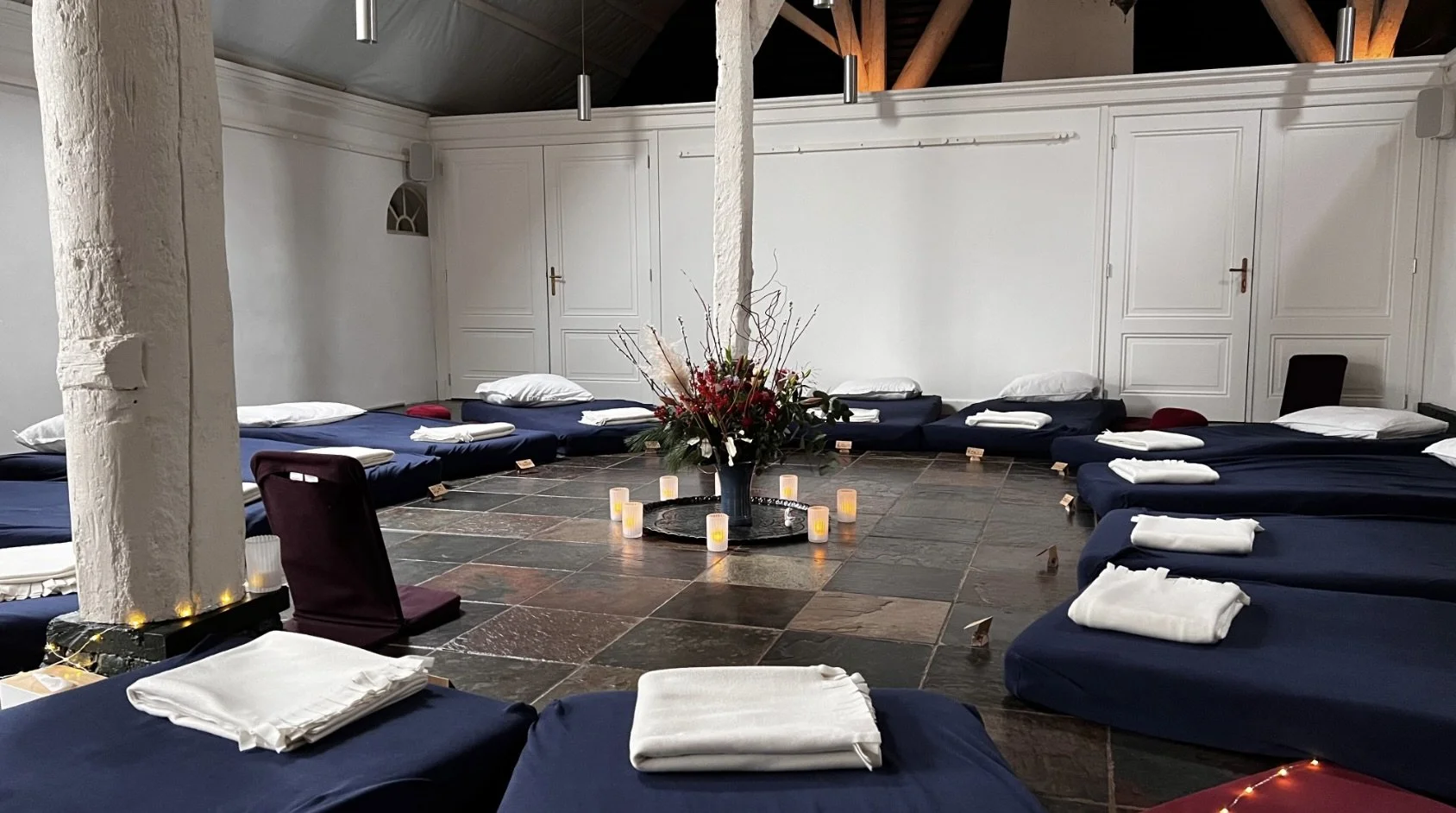
And why the substance itself Is Only Part of the Story
Over the last decade, psilocybin—the naturally occurring psychedelic compound found in certain species of mushrooms—has become one of the most researched and promising areas in mental health.
Clinical trials at leading institutions including Johns Hopkins Medicine's Psychedelics Research programme and Imperial College London's Centre for Psychedelic Research have reported encouraging outcomes for people living with treatment-resistant depression, end-of-life distress, alcohol use disorder and, increasingly, PTSD and other trauma-related conditions. Interest in its potential has grown rapidly among researchers, clinicians, policymakers and the public alike.
The results are genuinely exciting.
But perhaps even more exciting is how our understanding has evolved.
When I first began following the research, much of the conversation centred on what psychedelics were doing to the brain. Today, while neuroscience remains fascinating, I find myself asking a different question.
Not simply:
“What does psilocybin do?”
But:
“What helps people turn a profound experience into lasting change?”
For me, that has become the far more interesting conversation.
A shift in how we understand psychedelic therapy
Early media coverage sometimes gave the impression that psychedelics themselves were the treatment, the ‘magic pill’ that we’ve come to love in the Western healthcare framework.
However, as the evidence base has grown, a more nuanced picture has emerged.
Psilocybin doesn’t simply “fix” depression or heal trauma. Rather, it appears to create a temporary window in which the brain and mind become more psychologically flexible. Long-established patterns of thinking, feeling and behaving may loosen, allowing new perspectives, emotional processing and learning to become possible.
Researchers are still investigating exactly how this occurs. Earlier theories focused heavily on changes within the brain’s Default Mode Network, while more recent work points towards broader changes in communication across multiple brain networks, increased neuroplasticity and alterations in the way the brain updates long-held predictions about ourselves and the world.
The science is still evolving.
What seems increasingly clear, however, is that the medicine creates a window of opportunity.
What happens with that window of opportunity is another question entirely.
Psychedelics don’t heal people. People heal.
This has become one of the biggest shifts in my own thinking.
A psychedelic experience can be profoundly moving. People often describe moments of deep insight, emotional release, forgiveness, compassion or connection with themselves, others or nature. I’ve experienced all of these, and more.
Yet insight alone doesn’t necessarily change a life. It alone hasn’t changed my life. Many of us have experienced moments of clarity before. We know what needs to change. The challenge is in implementing the incremental changes needed; in living differently once everyday life resumes.
In this sense, the psychedelic experience is not usually the destination.
It’s an important step onto a path.
The real work often unfolds afterwards, as those insights are gradually translated into new ways of relating to ourselves, our relationships and our daily lives.
Why preparation matters
One of the most significant developments within psychedelic-assisted therapy has been the growing recognition that preparation is not simply administrative. It is therapeutic, self-reflective and requires capacity-building.
Preparing well means much more than understanding the practicalities of a retreat or clinical session.
It involves exploring intentions without becoming attached to particular outcomes, developing realistic expectations - or letting them go. Understanding the possibility that difficult emotions may arise and being equipped to hold oneself and self-regulate through the nervous system activation that arises.
It invites strengthening sources of wider - family, community - support.
In other words, creating enough internal and external stability that whatever emerges during the experience can be met with curiosity rather than fear, and with an openness to perhaps even uncertainty as things shift, such that ‘everything may be here,’ rather than be wrong, bad, undesirable and/or pushed away.
It helps us develop a holistic, multi-disciplinary toolkit to meet whatever arises.
The body is part of the conversation
One area that particularly interests me is the relationship between psychedelic work and the body.
Trauma is not only something we remember. It is something our nervous system learns.
This means that profound psychological insight may sometimes arrive before our body feels ready to receive it.
Through trauma-sensitive, body-led practices, people can begin developing greater awareness of their internal experience, noticing sensations, emotions, impulses and patterns of protection with increasing spaciousness, curiosity, compassion.
This isn’t about trying to relax in the face of challenge.
It’s about gradually helping our body discover that it has more options than it once believed, and new ways in which to adapt.
For me, this is where body-led work complements psychedelic work so beautifully.
It helps people develop enough trust to meet whatever arises.
Integration is where lasting change happens
A psychedelic experience may last six hours. Integration may continue for six months, or much longer.
It is the ongoing process of making sense of what was experienced and asking:
What does this mean for how I live now?
Sometimes integration involves practical changes.
A difficult conversation.
A healthier boundary.
A renewed creative practice.
More time in nature.
Sometimes it involves grief.
Sometimes it involves rest.
Sometimes the greatest insight is not what happened during the experience, but how gently we choose to respond to ourselves afterwards. With thoughtful integration, however, small insights can grow into lasting transformation.
What does the research say?
Although research is continuing at a remarkable pace, several themes are emerging consistently.
Clinical studies suggest that, when delivered in carefully screened, professionally supported settings, psilocybin-assisted therapy may help reduce symptoms of treatment-resistant depression, end-of-life anxiety and depression, and alcohol use disorder. Research into PTSD and other trauma-related conditions is also expanding, although further high-quality studies are still needed before routine clinical use becomes widespread.
Researchers increasingly emphasise that outcomes appear to depend on far more than the medicine itself.
Preparation, therapeutic support, the environment in which the experience takes place, and careful integration afterwards all seem to play important roles in determining whether benefits are sustained over time. Recent expert consensus statements have echoed this view, highlighting the importance of clinical standards, ethical practice and long-term follow-up alongside the medicine itself.
In other words, context matters.
Safety first
Although psilocybin has a favourable physiological safety profile when compared with many other substances, it is not appropriate for everyone.
Careful screening remains essential. People with a personal or family history of psychotic disorders, certain cardiovascular conditions or particular medications may face increased risks. Psychedelics can also bring intense emotional material to the surface within a relatively short timeframe, making appropriate preparation, skilled facilitation and ongoing support crucial.
This is why the phrase set and setting remains just as relevant today as ever. It reflects a truth:
Human beings do not heal in isolation from one another or their environment.
The quality of the relationships, preparation, physical surroundings and support available before, during and after the experience all matter enormously.
The global picture
The legal landscape surrounding psychedelic-assisted therapy continues to evolve.
Australia now permits authorised psychiatrists to prescribe psilocybin for treatment-resistant depression under tightly regulated conditions. Several states in the United States have introduced legal pathways for supervised access or licensed therapeutic services, while clinical research continues to expand across North America, Europe and elsewhere. In the Netherlands, psilocybin-containing truffles remain legal within a regulated retreat model, while the UK continues to support world-leading research despite psilocybin remaining a controlled substance outside approved research settings.
In April 2026, the United States also announced an executive order aimed at accelerating research and regulatory review for promising treatments for serious mental illness, including psychedelic medicines. Importantly, this did not legalise psilocybin or approve it for routine clinical use, but it did signal increasing governmental interest in supporting further research.
Although regulation differs widely between countries, the overall direction of travel is clear: rigorous scientific investigation is increasing, clinical standards are becoming more robust, and discussions are gradually shifting from whether psychedelics have therapeutic potential to understanding how they can be used safely, ethically and effectively.
My perspective
The longer I work in this field, the less interested I become in extraordinary experiences for their own sake. I’m drawn to a quieter question.
How do we help people build lives that feel safer, more connected and more fully their own?
Psychedelics can sometimes create remarkable opportunities for change, but they cannot do the work for us.
People heal - and psychedelic experiences are capable of creating conditions that make that healing more possible.
Our role as facilitators, therapists and practitioners, I believe, is not to promise transformation.
It is to help create the safest possible conditions in which transformation can unfold, to get ourselves and our egos out of the way, and then to walk alongside people as they integrate those experiences into ordinary, everyday - often mundane - life.
Because ultimately, healing is not measured by what happens during a ceremony, but by how we return to our relationships, our communities and ourselves in the weeks, months and years that follow.
Further reading: RESEARCH INTO THE EFFICACY OF TRAUMA SENSITIVE YOGA
